
Florida’s Space Coast: The Real Estate Investor’s Guide to Cash Flow, Risk & Tenant Demand
When investors say they’re “looking at Florida,” they usually mean one of three things: vacation rentals, retirement communities, or speculative appreciation plays driven by migration headlines.
The Space Coast doesn’t fit neatly into any of those buckets. And that’s exactly the point.
This region—anchored by aerospace, defense, engineering, and advanced manufacturing—behaves very differently from South Florida, Tampa, or even Orlando. It’s not built on tourism. It’s not driven by retirees. And it’s not priced like a hype market, despite having real economic gravity.
For long-term rental investors, that combination is rare.
What (and Where) the Space Coast Actually Is
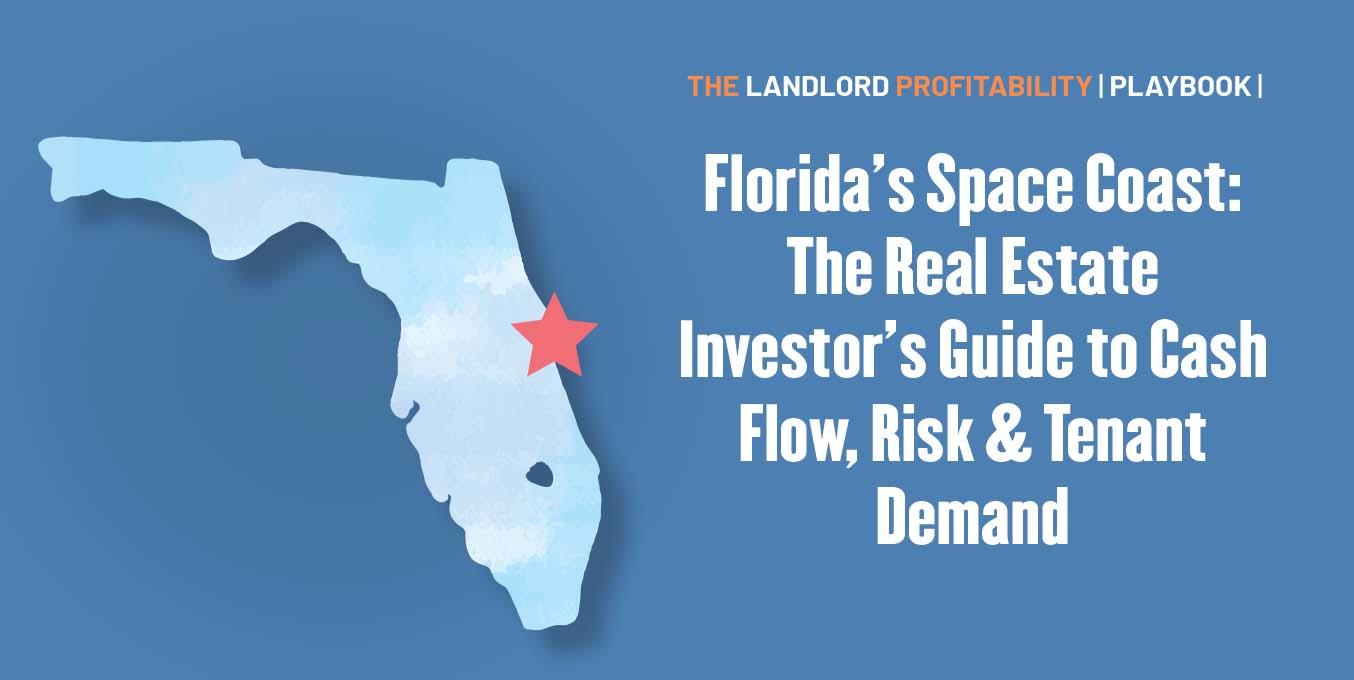
The Space Coast is largely Brevard County, running north–south along Florida’s Atlantic shoreline, with employment density clustered inland around:
- Cape Canaveral Space Force Station
- Patrick Space Force Base
- Melbourne, Palm Bay, Rockledge, Cocoa, and Titusville
Yes, there are beaches. No, they’re not the economic engine.
This is a working region, not a seasonal one.
The Real Economic Driver: Aerospace Isn’t a Buzzword Here
The Space Coast’s economy is anchored by long-term institutional employers, not discretionary travel spending.
Major presences include:
- NASA
- SpaceX
- Northrop Grumman
- Lockheed Martin
- **Blue Origin Market, Not a Retirement Play
One of the most persistent misconceptions about Florida investing is that everything south of the Mason-Dixon line skews old.
The Space Coast doesn’t.
Household composition here leans toward:
- Dual-income professional families
- Engineers and technicians with children
- Military and defense-adjacent households
- Long-term renters by choice, not necessity
Translation: people who renew leases.
That’s a different risk profile than vacation-driven or retiree-heavy submarkets.
Quality of Life: Quietly Strong (and That’s an Advantage)
The Space Coast offers something investors often underestimate: livability without chaos.
Residents get:
- Short commutes
- Access to water, trails, and outdoor space
- Solid school systems by Florida standards
- Lower congestion than Tampa, Orlando, or South Florida
- Coastal amenities without resort pricing
This isn’t a “hot” market socially—and that’s exactly why it functions well operationally.
Cost to Enter: Florida Without Florida Pricing
Here’s where investors tend to do a double-take.
Compared to:
- South Florida (Miami–Fort Lauderdale)
- Tampa–St. Petersburg
- Naples / Southwest Florida
…the Space Coast remains meaningfully cheaper to enter.
Yet compared to Ohio markets:
- Purchase prices are higher
- Insurance and taxes require underwriting discipline
- Rent ceilings are materially stronger
This puts the Space Coast in a hybrid category:
- More appreciation and rent growth than Midwest cash-flow markets
- Less volatility and speculation than headline Florida metros
It’s not cheap.
It’s rational.
How the Florida Rental Market Actually Behaves
This is where many investors get tripped up.
The Space Coast:
- Rewards clean, well-maintained single-family homes
- Penalizes deferred maintenance quickly
- Favors 3-bed / 2-bath layouts with garages
- Performs best with long-term property management discipline
It is not forgiving of sloppy execution—but it’s very consistent for owners who treat rentals like assets, not lottery tickets.
Why the Space Coast Belongs in a Diversified Portfolio
Ohio markets offer predictability, yield control, and operational efficiency.
The Space Coast offers:
- Demographic tailwinds
- Higher-income tenant bases
- Asymmetric upside tied to national aerospace investment
- Geographic diversification without pure speculation
Used together, these markets don’t compete—they counterbalance.
The Bottom Line
The Space Coast isn’t Florida-lite. And it’s not Florida-wild.
It’s a structurally distinct market driven by:
- Aerospace and defense employment
- Family formation
- Long-term residency
- Under-the-radar livability
For investors willing to do the work—understand insurance, reserves, and maintenance standards—it offers something rare: a Florida market that behaves more like a business than a headline.
Invest with Confidence—Invest with ROOST
At ROOST Real Estate Co., we know that profitability is the ultimate goal. That’s why we work so hard to ensure your properties are maintained to the neighborhood standard, marketed well, and rented to the right tenants.
PLUS… Whenever you’re ready, here are three ways we can help you automate your rent collection and get on with your life:
- Get your free copy of What to Expect from Your Property Manager (Even If Your Property Manager is YOU!) and unlock the secret to stress-free, profitable rental property ownership. Download the book at StressLessEarnMore.com
- Learn practical ways to free up your time and increase your profits. Listen to The Landlord Profitability Playbook Podcast at www.LandlordProfitabilityPlaybookPodcast.com
- Get a FREE Market Rate Rent Analysis for your properties. Sometimes a second opinion can make a big difference in your business. www.MarketRateRent.com
- Get a Personalized Property Management Quote and free property management consultation with Gretchen Mitchell at www.PMServicesQuote.com.

Chris McAllister
Chris McAllister was first licensed as a real estate broker in Ohio in 2003 and in Florida in 2015. He founded ROOST Real Estate Co. in early 2014.
Chris’s passion is creating and coaching business opportunities and strategies that support and add value to real estate professionals and their clients. He is the author of several books on the profession, including Protecting the Goose that Lays the Golden Eggs and Eight Success Habits of the New Real Estate Professional.
As both a real estate investor and landlord advocate, Chris also wrote What to Expect from Your Property Manager (Even if Your Property Manager is You) and The Landlord Profitability Playbook — a system for automating property management and reclaiming your time.
Chris is also the host of several podcasts, including Connect, Practice, Track, and Grow for real estate professionals, The Landlord Profitability Playbook Podcast for residential real estate investors, and The All Things Real Estate Podcast for home buyers and sellers.
Follow Chris on LinkedIn, YouTube, and Facebook for new episodes, insights, and landlord profitability strategies.