Your approach to rental property repairs, maintenance, and property improvements will determine whether you’re attracting quality tenants and growing equity, or throwing money at the wrong problems.
In other words, this is one of those plays where landlords either maximize their profitability—or unknowingly drain it away.
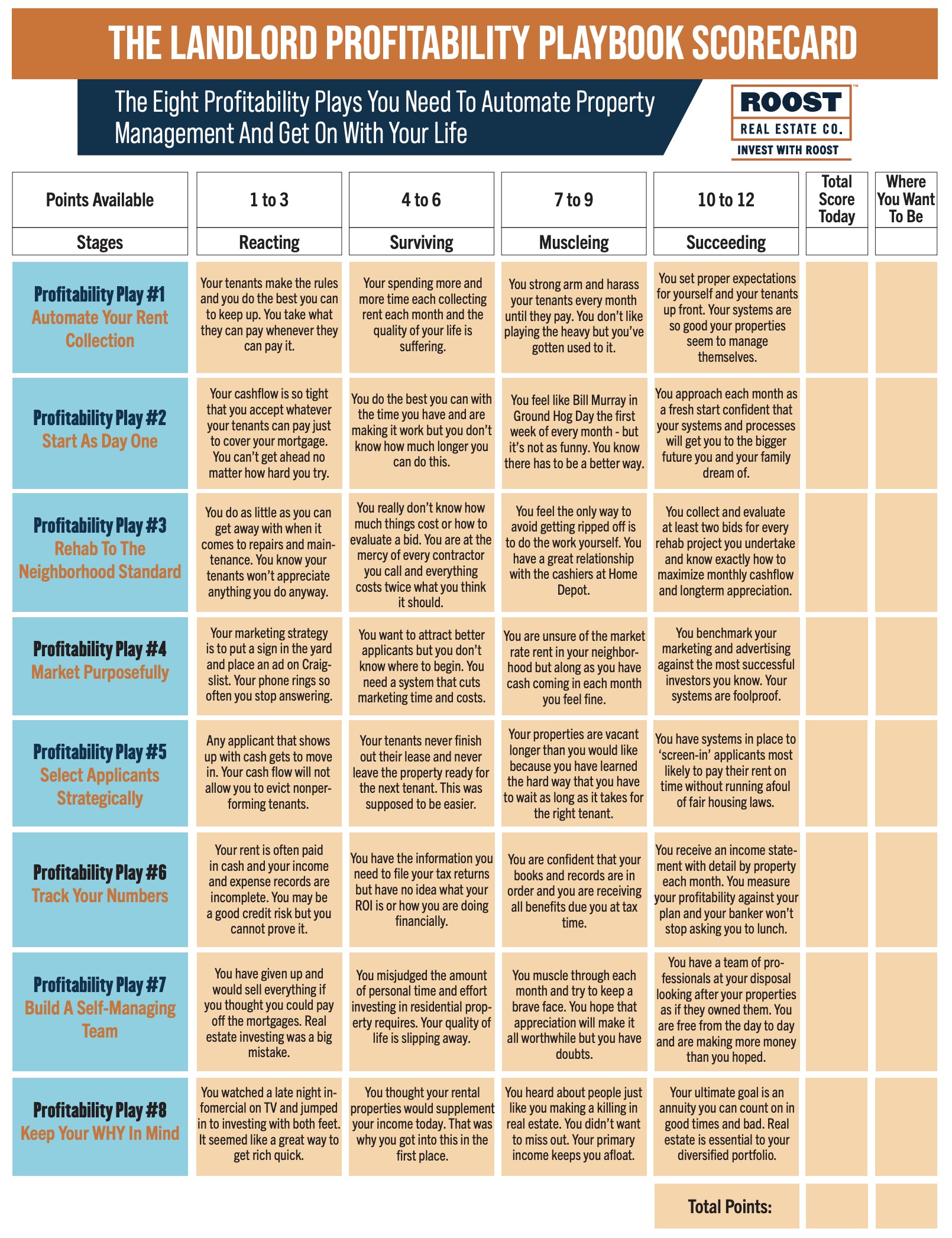
👉 Click here to download the Landlord Profitability Playbook Scorecard to track your progress as we break down the four stages of rehab strategy.
Stage 1: Reacting (1–3 Points)
If you’re in the Reacting stage, you’re doing the bare minimum. You might tell yourself,
“Tenants don’t appreciate anything anyway—why bother?”
That mindset usually comes from frustration. Maybe you upgraded a property only to see it damaged. Or you replaced fixtures just to watch them wear out again.
So now you don’t worry about the neighborhood standard. You patch walls instead of repainting, choose the cheapest materials, and figure it’s “good enough.”
But here’s the problem: substandard housing attracts substandard tenants—and that cycle feeds on itself.
Properties that look and feel cheap rent for less, draw more maintenance issues, and damage your reputation. Before long, you’re not managing an investment—you’re managing frustration.
Bottom line: doing less costs more. You’re leaving rental income and appreciation on the table.
Stage 2: Surviving (4–6 Points)
At this stage, you want to do better—but you’re overwhelmed.
Every contractor quote feels like a gamble. One bathroom bid comes in at $3,000, another at $12,000. You don’t know what’s fair.
You’re not sure whether to trust the lowest bid or the most professional one. You don’t understand the difference between builder-grade and mid-range materials, and you’re tired of feeling like you’re being overcharged.
Because you don’t have a clear system or standard, every project feels risky. Sometimes you overpay for mediocre work. Other times you choose the cheapest option and regret it later.
This uncertainty makes it impossible to budget effectively, and your hesitation to invest keeps your property stuck below its potential—both in rental income and long-term value.
Stage 3: Muscling (7–9 Points)
You’ve learned to stop relying on contractors—because you’ve become one yourself.
You spend weekends at Home Depot, watching YouTube tutorials, and tackling everything from plumbing to tile work. You’re proud of what you can do—and rightly so. You’ve learned valuable skills and you care about the outcome.
But your time has value, too.
When you spend 20 hours installing tile to save $1,500, that’s 20 hours you’re not using to find new deals, fill vacancies, or grow your portfolio.
You’re trading time for money—and slowing your ability to scale. If you want to stay profitable, something has to change.
Some jobs require professional expertise, and doing everything yourself limits your growth.
“Muscling through” might work short-term, but true profitability comes from systems, not sweat.
Stage 4: Succeeding (10–12 Points)
In the Succeeding stage, you’ve evolved from property owner to smart investor.
You collect at least two bids for every rehab project. You understand which improvements raise rent and which improve resale value. You’ve built reliable relationships with contractors who price fairly because they know you’re a repeat client. You may even have your own “maintenance dream team.” (Or, you have found a property manager who knows how to control rehab & maintenance costs.)
You make strategic investments that pay back in measurable ways:
- Spend $3,000 to update a kitchen → raise rent by $200/month → 15-month payback.
- Invest in higher-quality flooring → lower maintenance costs → better long-term ROI.
You know when to pay more for quality and when to save without cutting corners.
Every dollar you spend on improvements now works for you—building wealth instead of just maintaining walls.
Where Are You Today?
Watch the video now to see whether you’re Reacting, Surviving, Muscling, or Succeeding?
Your rehab strategy impacts everything—your rental income, tenant quality, reputation, and long-term returns. The key to profitability isn’t just spending less; it’s spending smart.
About the Landlord Profitability Playbook Video Series
In this video series, we’re going to walk through the eight profitability plays that separate successful real estate investors from those who are just surviving – or worse, failing.
So click here to grab the free scorecard, and follow along. This isn’t just another assessment tool – it’s your roadmap from wherever you are today to where you want to be 12 months from now.
Invest with Confidence—Invest with ROOST
At ROOST Real Estate Co., we know that profitability is the ultimate goal. That’s why we work so hard to ensure your properties are maintained to the neighborhood standard, marketed well, and rented to the right tenants.
PLUS… Whenever you’re ready, here are three ways we can help you automate your rent collection and get on with your life:
- Learn practical ways to free up your time and increase your profits. Listen to The Landlord Profitability Playbook Podcast at www.LandlordProfitabilityPlaybookPodcast.com
- Get a FREE Market Rate Rent Analysis for your properties. Sometimes a second opinion can make a big difference in your business. www.MarketRateRent.com
- Get a Personalized Property Management Quote and free property management consultation with Gretchen Mitchell at www.PMServicesQuote.com.

Chris McAllister
Chris McAllister was first licensed as a real estate broker in Ohio in 2003 and in Florida in 2015. He founded ROOST Real Estate Co. in early 2014.
Chris’s passion is creating and coaching business opportunities and strategies that support and add value to real estate professionals and their clients. He is the author of several books on the profession, including Protecting the Goose that Lays the Golden Eggs and Eight Success Habits of the New Real Estate Professional.
As both a real estate investor and landlord advocate, Chris also wrote What to Expect from Your Property Manager (Even if Your Property Manager is YOU!) and The Landlord Profitability Playbook — a system for automating property management and reclaiming your time.
Chris is also the host of several podcasts, including Connect, Practice, Track, and Grow for real estate professionals, The Landlord Profitability Playbook Podcast for residential real estate investors, and The All Things Real Estate Podcast for home buyers and sellers.
Follow Chris on LinkedIn, YouTube, and Facebook for new episodes, insights, and landlord profitability strategies.